

The parts that decide
how the station performs.
A €500 rework station with the wrong nozzle on it is a €500 hair dryer. Hot air nozzles in four series with their real bores and shapes, solder wire in every useful size, and the bench tools that make the difference between rework and guesswork.
Four series, 18 nozzles
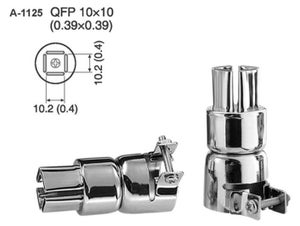
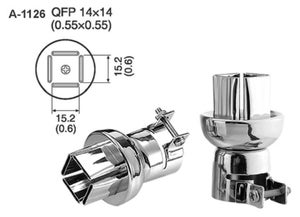
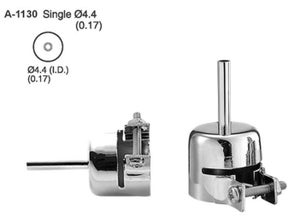
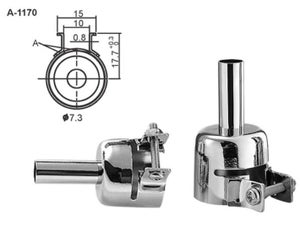
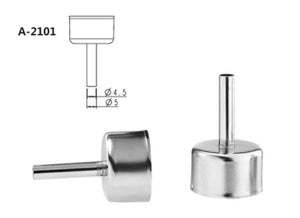
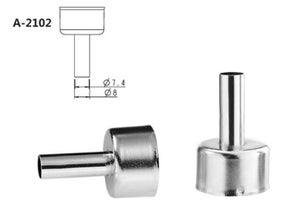
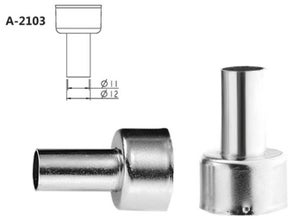
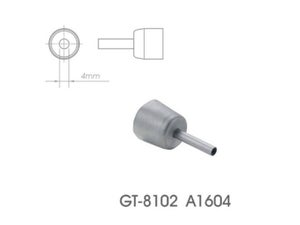
Two things matter: whether it fits your gun, and what shape the air comes out in. ATTEN publishes neither in text — every bore and dimension below is read off the technical drawing on the product itself.
A-11 series
€5,00 Screw clamp mounting Station list not published — ask usPackage nozzles that clamp onto the barrel with a screw band. Two are shaped for a specific QFP footprint, so the air goes down all four rows of pins at once instead of one side at a time.
A-21 series
€5,00 Slip-on mounting Station list not published — ask usPlain round nozzles that slip over the barrel — no clamp, no tools. Three bores covering everything from a single lead to a small IC.
A-16 series
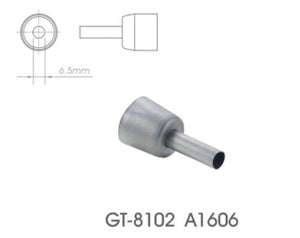
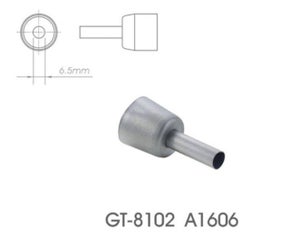
€5,00 Slip-on mounting Fits the GT-8102The nozzle set for the GT-8102 rework station. Small bores — this is a 1000 W gun, so the heat is in the air rather than the aperture.
A-26 series
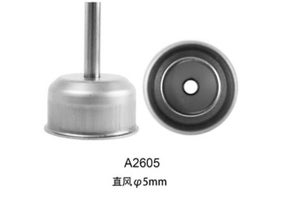
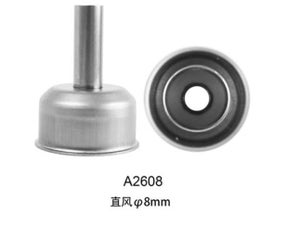
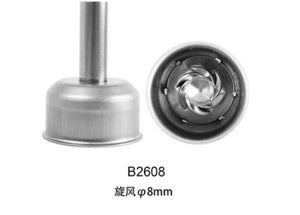
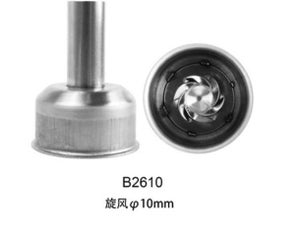
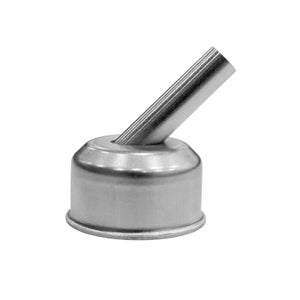
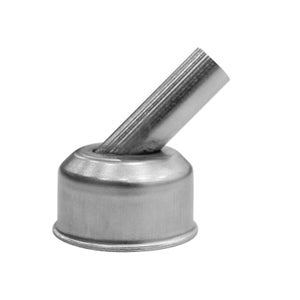
€10,00 Slip-on mounting Fits the ST-862DThe ST-862D family, and the only series where you choose the air pattern as well as the bore: A is straight air, B is spiral. C-prefix nozzles are bent 45° so you can reach a joint without leaning over it.
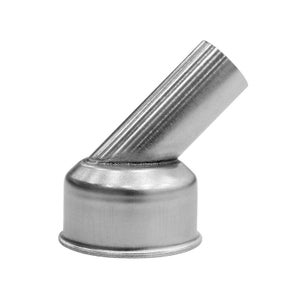
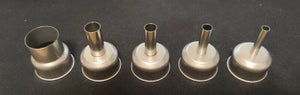
Straight air
or spiral air?
In the A-26 series the letter in front of the number is not a revision — it is the air pattern, and it changes how the nozzle behaves more than the bore does.
The ST-862D is built to take both, which is what its “convertible straight air / spiral air” specification means in practice.
Straight air
A plain column of air straight down the bore. Concentrated and directional — the right choice for a single joint, a small part, or anywhere you must not disturb what is next to it.
Spiral air
Vanes inside the nozzle set the air rotating, so it spreads across a wider area and reaches the sides of a package as well as the top. Better for anything with a footprint — it heats the whole part instead of drilling a hot spot into the middle.
Sn63Pb37, three diameters, three reel sizes
Sn63Pb37 is the eutectic tin-lead alloy: it melts and freezes at one temperature, 183 °C, with no plastic range in between. That is why a joint made with it either looks right immediately or does not — there is no half-set stage to disturb.
Prices include VAT. Every cell links straight to that reel.
Fine SMD, 0402 and smaller, fine-pitch IC pins. Feeds slowly enough that you can meter a tiny joint.
The default. Covers almost all through-hole and general SMD work — if you only stock one reel, stock this.
Through-hole, connectors, ground pours and wire. Puts solder down fast enough to keep up with a 100 W iron.
See it, hold it, breathe less of it
Five things that cost very little and change the job more than another twenty watts would.
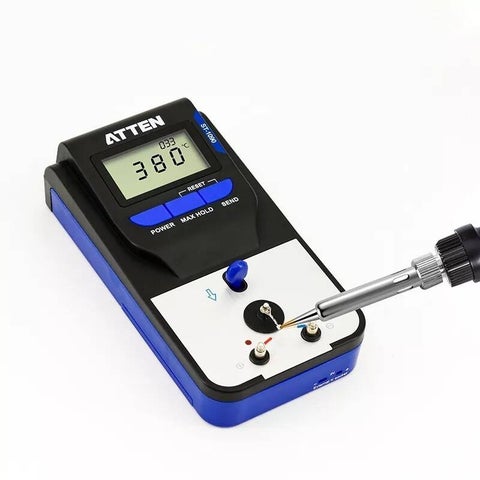
ST-1090
€64,00A K-type thermocouple meter made for tips. The only way to know whether the number on your station's display is the number at the joint.
- Reads in °C or °F on an LCD
- Sensor wire is Ø0.2 mm — a consumable, good for about 50–60 measurements
- Runs on a 9 V battery
- Never point a hot air gun at the meter itself
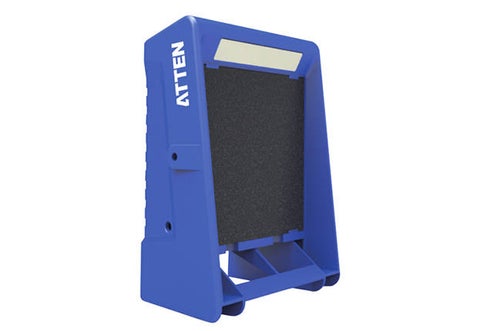
ST-1016
€33,00Desktop smoke absorber that stands vertically or lies flat, with an activated-carbon filter and a work light built in.
- Pulls solder smoke away from your face rather than through it
- Activated-carbon filter element is a replaceable wear part
- LED lighting on the working area
- Also sold as the ST-1016-CP
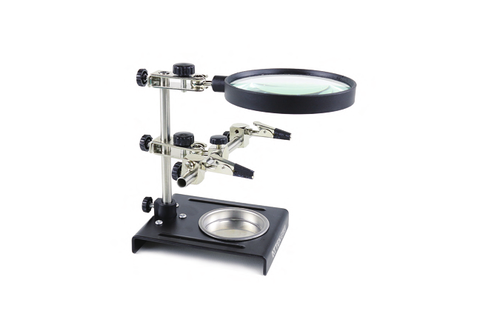
FT-90A
€15,00Steel base, articulated arm and a 3× lens that stays where you put it. For dense boards it is the difference between rework and guesswork.
- Movable mechanical arm adjusts in any direction
- Weighted steel base stays put on the bench
- Made for high-density, fine-pitch board work
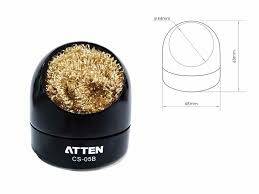
CS-05B
€12,00Brass wool in a holder. Cleans the tip without the thermal shock of a wet sponge — which is the single cheapest thing you can do for tip life.
- Brass wool does not cool the tip the way a wet sponge does
- No water, so no oxidation cycle on the plating
- Refillable holder
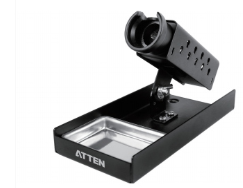
S11
€3,95A spare stand for a second iron, or a replacement for the one that walked off the bench.
- Universal — takes the common ATTEN handle shapes
- Cheapest way to give a second iron a safe home
Tips, spares and the stations themselves
Not sure which nozzle fits your gun?
Send us the model number of your hot air station — and, if you can, a photo of the end of the barrel. We will tell you which series to order and which bores are worth having on the shelf.
Which hot air nozzle fits my station?
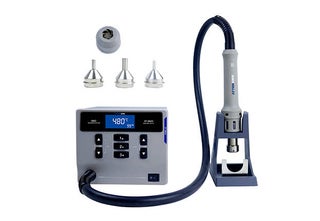
Two of the four series are documented: the A-16 series is the GT-8102 set, and the A-26 series is for the ST-862D family — which is why the 45° C-nozzles and the original five-piece set sit in it. For the A-11 and A-21 series ATTEN publishes no station list, so check the mounting instead: A-11 nozzles clamp on with a screw band, A-21 nozzles simply slip over the barrel. If you are not sure, send us your station model and we will confirm before you order.
What is the difference between straight air and spiral air?
A straight nozzle (A-prefix) blows a column of air straight down. A spiral nozzle (B-prefix) has vanes that make the air rotate, so the heat spreads more evenly over a wider area and hits the part from the sides as well as above. Straight air is better for a single joint or a small part; spiral is better for anything with a footprint, because it heats the whole package at once instead of drilling a hot spot into the middle of it. The ST-862D is designed to take both.
Which nozzle size should I choose?
Match the nozzle to the part, not the board. It wants to cover the component and its leads and as little else as possible — too big and you cook the neighbours, too small and you take a long time and end up overheating the middle. For a QFP, a shaped nozzle like the A-1125 or A-1126 that covers all four rows at once beats any round bore.
Which solder wire diameter do I need?
0.8 mm if you are only buying one. 0.5 mm for fine SMD where you need to meter a very small amount, 1 mm for through-hole, connectors and anything with copper behind it. All of it is Sn63Pb37 — the eutectic leaded alloy that melts and freezes at a single temperature, 183 °C, with no plastic range in between.
Do these consumables fall under the warranty?
No. Nozzles, tips, heating elements, filters and thermocouple sensors are wear parts and sit outside the warranty entirely. The warranty covers the equipment: two years on the base station and one year on the soldering handle.
Where do I find soldering tips and heating elements?
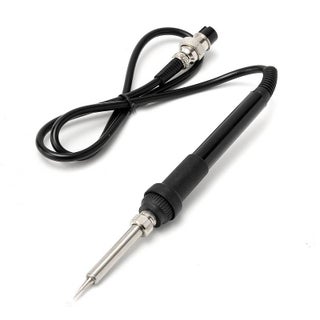
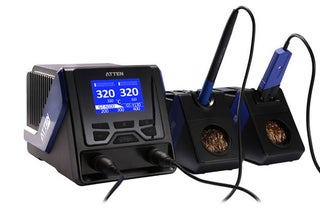
Tips have their own section — 101 original tips across 11 series, with a table telling you which series fits your station. Spare handles, heating elements and carbon filters are under spare parts.