

ATTEN ST-1016 Solder Smoke Absorber, Carbon


ATTEN ST-1016 solder fume absorber: replaceable activated carbon filter, LED work light, upright or tilted stand, 1.03 m³/min.
Keep the smoke
out of your face.
What rises off a joint is mostly vaporised rosin flux, and it goes straight up into whoever is leaning over the board. The ATTEN ST-1016 sits beside the work, pulls that plume through an activated-carbon pad and returns the air to the room — no ducting, no installation, one switch.
It works upright behind the board or tilted back over it on a fold-out wire stand, so the intake can face the joint instead of the ceiling. An LED bar across the intake face lights the work, which matters because an absorber wants to stand exactly where you would otherwise put a lamp.
The carbon pad lifts out without tools and replacements are stocked at a couple of euro, so the absorber stays useful rather than quietly becoming ornamental once the first filter saturates.
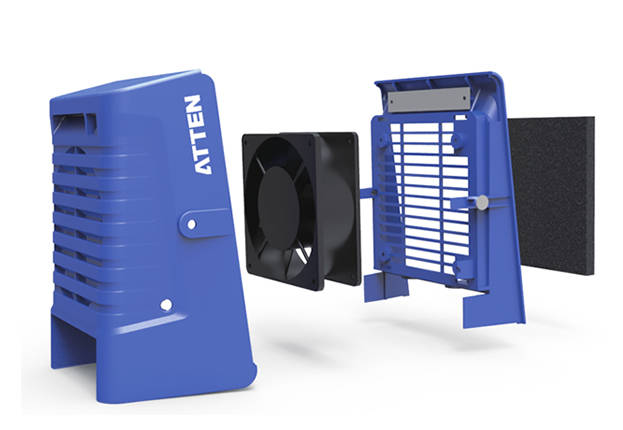
What it does
Stands up or lies back
A fold-out wire stand lets it work upright behind the board or tilted back over it, so the intake can face the joint rather than the ceiling.
LED work light
A light bar across the top of the intake face throws light onto the work — useful, because the absorber wants to sit exactly where a bench lamp would.
Replaceable carbon filter
The activated-carbon pad lifts out from behind the grille without tools. Filters are a stocked spare part, so the unit does not become disposable when the pad saturates.
Plug in and switch on
A rocker switch on the body and a 220 V mains lead. There is nothing to set up, which is largely why it gets used.
Close, and slightly to one side
A bench absorber is only as good as its position. Smoke leaves a joint slowly and drifts, so the unit needs to be within about a hand's span of the work and angled to catch the plume as it rises — not parked across the bench, where it will draw the smoke past your face on its way over.
That is what the tilting stand is for. Standing it upright behind a board is the tidy option; laying it back over the work is usually the effective one.
| Maximum suction capacity | 1.03 m³/min |
| Air volume, upright | 1.03 m³/min |
| Air volume, tilted | 0.4 m³/min |
| Air flow, upright | 1.0 m³/min |
| Air flow, tilted | 2.6 m³/min |
Reproduced exactly as ATTEN gives it. Note that “air volume” and “air flow” carry the same unit while the figures move in opposite directions, so the two rows are evidently measuring different things. We have not attempted to reconcile them.
What you receive
- Smoke absorber, carbon filter fitted
- User manual
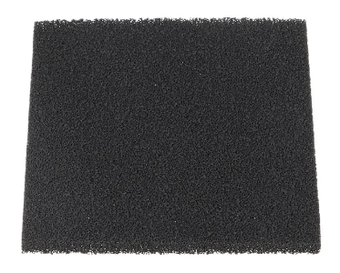
The carbon pad is the only consumable, and a saturated one stops absorbing long before it looks used. Spares are stocked and cost about the same as a coffee.
Activated carbon filter — €2,00 →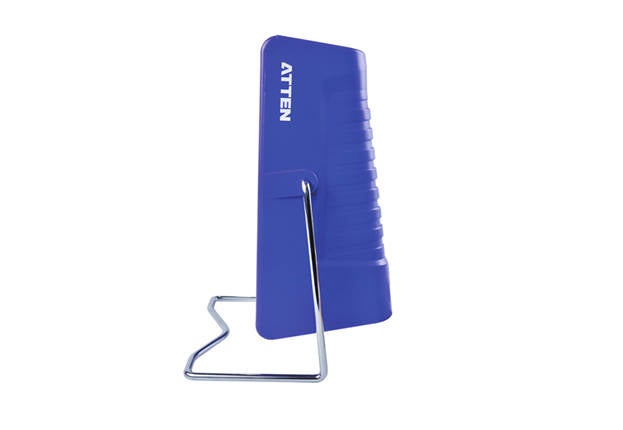
Not sure it is what you need?
Tell us how your bench is arranged and how much soldering you actually do. A bench absorber suits most repair and assembly work — if yours is a case where it would not be enough, we would rather say so than sell you one.
Frequently asked questions
Does it actually remove the fumes, or just move them?
It filters them. Air is drawn through an activated-carbon pad, which adsorbs the rosin flux products that make solder smoke unpleasant, and the cleaned air is returned to the room — there is no ducting to fit. That is the trade-off of a bench absorber: convenient and effective at keeping smoke out of your face, but dependent on the filter being fresh. It is not a substitute for a ducted extraction system in a production environment.
How often does the filter need changing?
It depends entirely on hours and on the flux you use, so any hard figure would be invented. The practical test is smell: when solder smoke starts reaching you again with the unit running, the carbon is saturated. Filters cost about two euro, so there is no reason to run one past its useful life — keep a spare in the drawer.
Where should I put it?
Close, and slightly to one side. Solder smoke rises slowly, so the absorber wants to be within roughly a hand's span of the joint and angled to catch the plume as it leaves the board — not across the bench, where it will pull the smoke past your face on the way. The fold-out stand exists so you can tilt it over the work rather than only stand it upright.
How much air does it move?
ATTEN publishes a maximum suction capacity of 1.03 m³/min and a short test-data table, which we reproduce below exactly as given. Be aware that ATTEN labels two of those rows with the same unit while the figures move in opposite directions, so the two are clearly measuring different things — we have not tried to reconcile them or quietly quote the flattering one.
Is a filter included?
Yes — the packing list is the absorber and the manual, and the unit ships with its carbon pad fitted. What you should add is a spare, not a first one.
Is it ESD safe?
This is the standard absorber and its housing carries no ESD marking, so if your bench works to a formal ESD procedure — the kind with documented surface resistance and an auditor — please check with us before ordering rather than assume. For ordinary electronics repair, hobby and workshop use it is exactly the right tool.
Specifications are taken from ATTEN's product documentation and are provided for guidance only; they may change without notice. Supply is 220 V~ 50 Hz, CE marked; the power rating printed on the unit is not legible in the published photographs and is therefore not quoted here. A recirculating carbon absorber reduces exposure to solder fume at the bench and is not equivalent to a ducted extraction system where one is required by your workplace assessment. If a particular figure matters, please ask us before ordering.